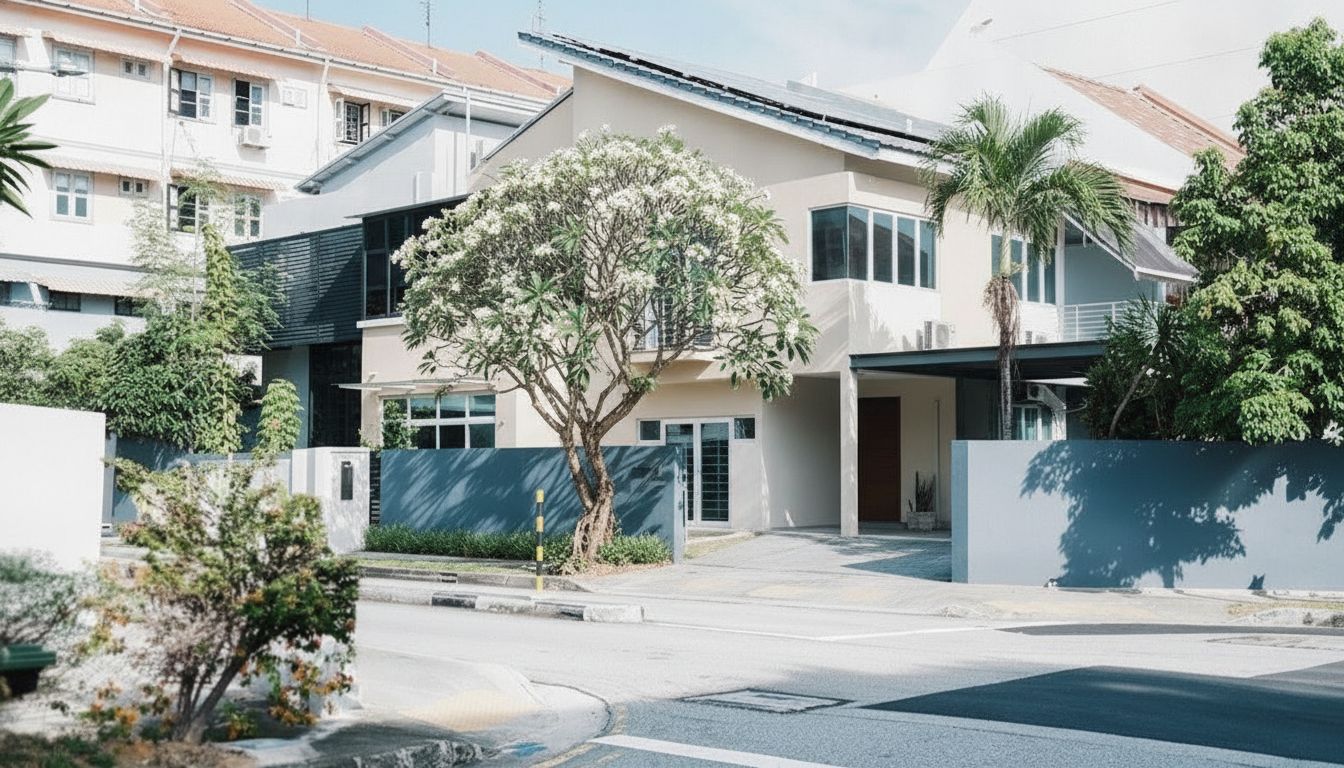
Landed Property FAQ
Straight answers to the questions buyers and sellers actually ask about owning, financing, and redeveloping landed homes in Singapore.
Not a substitute for professional advice
Landed property ownership in Singapore involves planning rules, tenure structures, stamp duties, and financing limits that change over time. These answers explain how the system works today and point you to the official agencies that set the rules.
The information here is current as of 14 October 2026. Regulations, rates, and procedures are revised from time to time. Confirm all details with the relevant government agency, your solicitor, and your mortgage advisor before acting.
Frequently Asked Questions
Buying and Eligibility
Who can buy landed property in Singapore?
Singapore citizens may buy most landed residential property without special approval. Singapore Permanent Residents and foreigners generally need approval from the Land Dealings Approval Unit for restricted landed properties such as terrace, semi-detached, and detached houses. Strata landed housing in approved condominium developments is not restricted in the same way. Rules and interpretations change; confirm the current position with URA and SLA.
What are the main types of landed housing in Singapore?
The principal categories are terrace houses, semi-detached houses, detached houses (bungalows), and Good Class Bungalows. Cluster or strata-landed housing offers a landed-style home within a strata-titled development with shared facilities. Shophouses with approved residential use are a separate category with their own conservation, planning, and tenure considerations.
What should I check before buying a landed home?
Review the URA Master Plan zoning, allowable plot ratio, Gross Floor Area rules, storey and height controls, setback and site coverage requirements, conservation status, existing encumbrances, and outstanding property tax or utility charges. Also verify boundary dimensions and whether the site is affected by any road or drainage reserves. Engage a solicitor, architect, and a landed-property specialist before committing.
Source: Urban Redevelopment Authority
Should I value the land or the existing house more?
It depends on your objective. If you plan to rebuild, the land size, shape, tenure, and plot ratio usually matter more than the condition of the house. If you intend to move in with minimal work, the structural condition, approved plans, and renovation quality become more important. A valuer can help you separate land value from building value.
Selling
Is Seller's Stamp Duty payable when selling a landed home?
Seller's Stamp Duty applies if the property is sold within the statutory holding period. The rate depends on how long you have held the property at the time of sale. IRAS sets the current holding period and rate schedule, which has been amended before.
How is selling a landed home different from selling a condominium?
Landed sales involve a land-title transfer rather than a strata-title transfer. There is no Management Corporation Strata Title, and the owner is directly responsible for boundary maintenance. The buyer pool is often smaller and more specific, and buyers frequently evaluate redevelopment potential alongside the existing house. Due diligence places greater weight on URA planning parameters and site constraints.
What documents should I prepare before listing?
Prepare the title deed or latest title search, approved building plans, floor plans, renovation and addition-and-alteration approvals, property tax statements, utility bills, and any tenancy agreements. Buyers will also want to know the land area, tenure, zoning, and plot ratio. Having these ready shortens the due-diligence period and reduces renegotiation risk.
Land Tenure
What is the difference between freehold and leasehold landed property?
Freehold ownership is indefinite, although the government can still acquire land under the Land Acquisition Act if needed. Leasehold ownership is for a fixed term, commonly 99 years or, less commonly, 999 years, after which the land reverts to the state or freeholder unless an extension is granted. Financing terms, resale pools, and long-term planning can differ materially between the two.
Source: Singapore Land Authority
What happens when a 99-year lease runs out?
When a 99-year lease expires, the land reverts to the State or the freeholder under the terms of the original lease. Lease extensions are not automatic and are granted only in specific circumstances, such as when the site is identified for redevelopment under a government programme. Do not assume a lease will be extended.
Can freehold land be acquired by the government?
Yes. Freehold status protects against private claims and expiry, but the State can still acquire land under the Land Acquisition Act for public purposes, with compensation paid according to the law. This applies to all private land in Singapore.
Financing and Taxes
How much can I borrow to buy a landed property?
Loan-to-value limits, the Total Debt Servicing Ratio, and your income and existing debt determine how much you can borrow. The Mortgage Servicing Ratio does not apply to private residential property. Banks also consider the property's valuation, tenure, and condition. Speak to a mortgage specialist and check the latest MAS rules.
What stamp duties apply to landed property purchases?
Buyers should budget for Buyer's Stamp Duty on the purchase price or market value, whichever is higher. Additional Buyer's Stamp Duty may apply depending on citizenship, residency, and the number of residential properties owned. Seller's Stamp Duty may apply if the seller is within the prescribed holding period. Rates and thresholds are revised from time to time; confirm the latest schedules with IRAS.
Can I use CPF savings to buy a landed home?
Yes, CPF savings can be used for the purchase of an approved private residential property, subject to withdrawal limits, the remaining lease requirement, and the available housing limit. The property must have a remaining lease of at least 20 years and must not be a short-lease property. Check the exact limits with CPF Board.
Source: CPF Board
Are property tax rates higher for landed homes?
Property tax is calculated based on the Annual Value of the property and the applicable tax rate structure, not the housing type alone. Because landed homes often have higher Annual Values than apartments, the tax payable can be higher in practice. Owner-occupied and non-owner-occupied rates differ; confirm the current rates with IRAS.
Renovation and Redevelopment
Can I rebuild or redevelop my landed home?
Generally yes, provided the proposal complies with URA zoning, plot ratio, height and storey controls, setback, site coverage, and any conservation guidelines. Detached and semi-detached houses may have different options for subdivision or redevelopment. You will typically need a qualified architect and a builder registered with BCA.
Do I need approval to renovate a landed house?
Structural works, additions, alterations, and changes to the facade generally require approval from BCA and/or URA, depending on the scope. Very minor internal works that do not affect structure or the exterior may not require planning permission. Always confirm with a qualified professional and the relevant agency before starting work.
What is plot ratio and why does it matter?
Plot ratio is the ratio of a building's Gross Floor Area to the site area. It determines how much built-up space you can create on a given plot. A higher plot ratio means more allowable floor area, which affects redevelopment potential, design options, and valuation.
Source: Urban Redevelopment Authority
What is a Good Class Bungalow?
Good Class Bungalows are detached houses located in designated Good Class Bungalow Areas. They are subject to minimum plot sizes and strict planning parameters, commonly a minimum plot size of 1,400 square metres and a maximum height of two storeys. They are the most restrictive and exclusive category of landed housing in Singapore.
Source: Urban Redevelopment Authority
The answers above are for general guidance only. Regulations, duties, and planning parameters change. Please confirm all details with the relevant government agencies and your legal, financial, and planning advisors.
Still have questions?
Send your question and Taufiq Corvin will get back to you with a direct, practical answer. No sales pitch, no obligation.