

Singapore Landed Property Prices in October 2026: Data, Medians and Land PSF
How much does landed property cost in Singapore?
There is no single reliable price for a terrace, semi-detached or detached house without first considering its location, tenure, land size and building condition.
The latest available official market data provides useful context, but an islandwide average or price index cannot tell you what a particular property in District 10 is worth.
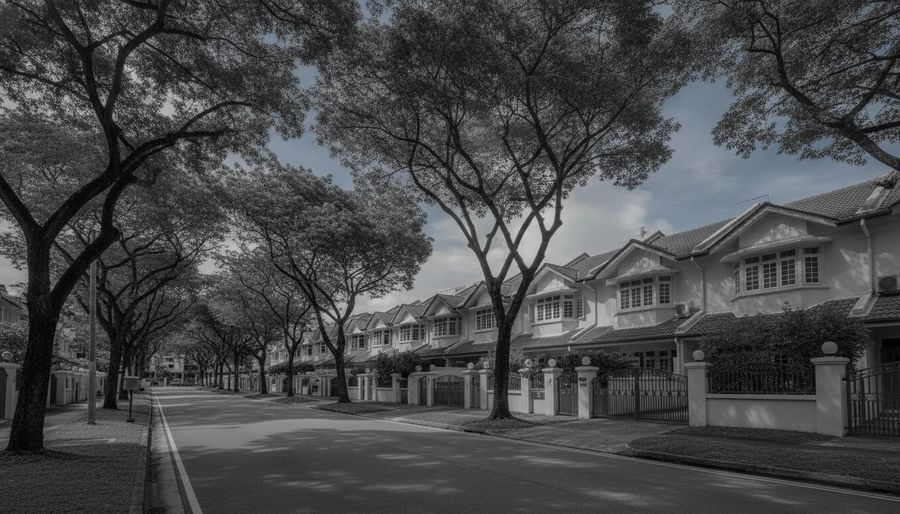
The latest official price-index movement
According to URA's final third-quarter 2026 statistics, released on 23 October 2026, landed private residential property prices rose 2.9% quarter-on-quarter.
This followed a 2.5% increase in the second quarter.
The broader private residential price index increased 1.4% in 3Q2026.
For 2025 as a whole, the landed property price index rose 7.6%.
These figures show how prices moved across the broader market. They do not mean every terrace, semi-detached house or bungalow increased in value by the same percentage.
A price index measures changes in market prices. It is not the same as a median transaction price, average sale price or land PSF. For more context on the most recent quarter, see our earlier look at the Singapore landed property market in 3Q 2026.
What historical terrace transactions tell us
ERA Research reported 1,852 landed property transactions in 2025, representing an 11.2% increase from 2024, based on its defined caveat dataset.
Its fourth-quarter 2025 report recorded a median transaction price of S$4.22 million for terrace houses in the Outside Central Region (OCR), compared with S$4.35 million in the previous quarter.
These figures should be interpreted carefully.
The median relates to a particular house type, geographical region and period. It is not a benchmark for semi-detached homes in District 10 or an asking-price recommendation for October 2026.
Different research reports may also apply different property classifications, exclusions and reporting methodologies.
Understanding CCR, RCR and OCR landed property prices
Singapore's private residential market is commonly divided into three regions. The classifications are a useful starting point for market-level comparisons, but regional averages should not be used to value individual landed homes.
Core Central Region (CCR)
The CCR contains Singapore's prime residential districts, including District 10. Landed properties here can be influenced by established neighbourhoods, limited supply, land tenure, individual street characteristics and the types of homes available.
Rest of Central Region (RCR)
The RCR includes established residential neighbourhoods outside the core prime areas. Landed-property values vary considerably between housing estates, even where properties fall within the same broad region.
Outside Central Region (OCR)
The OCR includes many established suburban landed housing estates. Buyers may encounter different combinations of land sizes, house types, building conditions and absolute prices.
Three property-price measures that should never be confused
Asking price
This is the price advertised by the seller. It represents the seller's intended starting position and does not necessarily reflect what the market will ultimately pay.
Transacted price
This is the consideration agreed between buyer and seller and reflected in the relevant transaction record.
Price index
This measures price movement across a defined market segment. It does not represent the price of an individual house.
Similarly, average and median prices are not interchangeable. An average can be influenced by unusually large or expensive transactions, particularly when detached houses or Good Class Bungalows are included in a small sample. A median represents the midpoint of the dataset but does not reveal how widely prices vary.
How to calculate land PSF for landed property
For land-titled landed property, one commonly used comparison measure is the transaction price divided by the land area.
Land PSF = Transaction Price ÷ Land Area
For illustration, a hypothetical S$9 million transaction involving 3,000 square feet of land produces:
S$9,000,000 ÷ 3,000 = S$3,000 land PSF.
This calculation does not separately identify the value of the existing building. It also does not account for frontage, plot configuration, tenure, building condition, orientation, access or redevelopment possibilities.
For meaningful transaction comparisons, record the following:
- Transaction date and location.
- Landed housing type.
- Tenure and relevant lease information.
- Land area.
- Total consideration.
- Land PSF.
- Existing building condition, where independently established.
- Relevant site-specific characteristics.
Why District 10 requires more detailed transaction comparisons
A District 10 buyer or seller should not assume that a CCR-wide price figure represents every landed house in Bukit Timah.
Properties around Namly, Lantana and Cypress should be assessed within their actual street and enclave context.
A newly rebuilt semi-detached home may attract a different buyer profile from an original-condition terrace purchased with redevelopment in mind. Similarly, a plot with an awkward driveway, unusual shape or different frontage may not command the same price as another property with the same land area.
A useful District 10 assessment should consider:
- The immediate street and surrounding enclave.
- House type and tenure.
- Comparable completed transactions.
- Plot shape, frontage and site levels.
- Access and parking.
- Current building condition.
- Rebuilding potential under prevailing controls.
Where recent transactions are limited, a broader time period or search geography may be needed. Any adjustment should be explained rather than treated as an exact valuation. Our post on why two District 10 homes on the same street can sell for very different prices explores this further, and our District 10 due diligence checklist covers the practical steps.
Good Class Bungalows are a separate market segment
Good Class Bungalows are subject to specific planning controls within designated GCB areas.
They generally require a minimum plot size of 1,400 square metres and are not directly interchangeable with ordinary detached houses.
GCB transactions can involve unusually high absolute prices and relatively small annual transaction samples. Combining GCBs with ordinary landed houses without explaining the dataset can produce misleading market comparisons.
What this means for landed property buyers and sellers
For buyers, market statistics help identify broad pricing trends and understand the competitive environment.
For sellers, recent completed sales help establish a starting point for a property-specific market assessment.
However, a pricing decision should not rest solely on a district-wide average, a regional PSF number or a neighbour's record sale. The relevant evidence is how genuinely comparable properties have transacted, adjusted for the differences that matter to buyers.
For District 10, that means looking beyond the district label and examining the particular enclave, street and individual plot.
Market data describes direction. A reliable pricing decision still depends on the specific property, its comparables and the buyer or seller's own timeframe.
Corvin Homes publishes market intelligence, enclave guides and advisory resources to help buyers and owners understand those differences before making significant property decisions.
For buyers, our buy a landed home advisory covers search strategy, due diligence and financing timelines. For owners, our sell your landed home service focuses on positioning, comparables and negotiation support. For questions that come up repeatedly, the landed property FAQ is a useful starting point.
For a conversation about how the October 2026 data applies to your District 10 property decision, contact Corvin Homes.
